






Elden Ring is widely praised for its combat, worldbuilding, and freedom of exploration, but beneath its surface lies a profound and often overlooked theme: isolation. Unlike many open‑world games that fill their landscapes with chatter, companions, and constant guidance, Elden Ring deliberately leaves the player alone—emotionally, narratively, and mechanically. This isolation is not accidental; it is a core design philosophy that shapes how players experience the Lands Between.
This article explores the psychological and narrative implications of Elden Ring’s isolation, examining how it evolves throughout the game and how it affects the player’s sense of identity, purpose, and emotional resilience. Through ten structured sections, we will analyze how FromSoftware uses loneliness as a storytelling tool, a gameplay mechanic, and a thematic anchor.
1. The First Step: Entering a World That Refuses to Hold Your Hand
The game begins with a quiet, almost suffocating emptiness. After the brief introduction, the Tarnished awakens in a ruined chapel, alone, with no companions or guidance. This moment sets the tone for the entire journey: you are on your own, and the world will not explain itself.
The lack of direction is intentional. Elden Ring does not provide a glowing path or a friendly NPC to guide you. Instead, it forces you to confront the unknown. This early isolation creates a sense of vulnerability that persists throughout the game, shaping how players approach exploration and danger.
The Emotional Weight of the Unknown
The first hours are filled with uncertainty. Every enemy feels threatening, every path feels dangerous, and every discovery feels earned. This emotional tension is the foundation of Elden Ring’s identity.
2. The Silent World: How Environmental Design Reinforces Isolation
Elden Ring’s world is vast, but it is also eerily quiet. The Lands Between are filled with ruins, abandoned villages, and desolate landscapes that hint at a civilization long gone. The silence is not empty—it is heavy with history.
The absence of bustling towns or friendly hubs reinforces the idea that the Tarnished is wandering through a world that has already ended. Even the few safe zones, like the Roundtable Hold, feel detached from reality, existing outside the world rather than within it.
Environmental Storytelling Through Emptiness
FromSoftware uses absence as a narrative tool. The lack of life tells a story of decay, loss, and abandonment more effectively than dialogue ever could.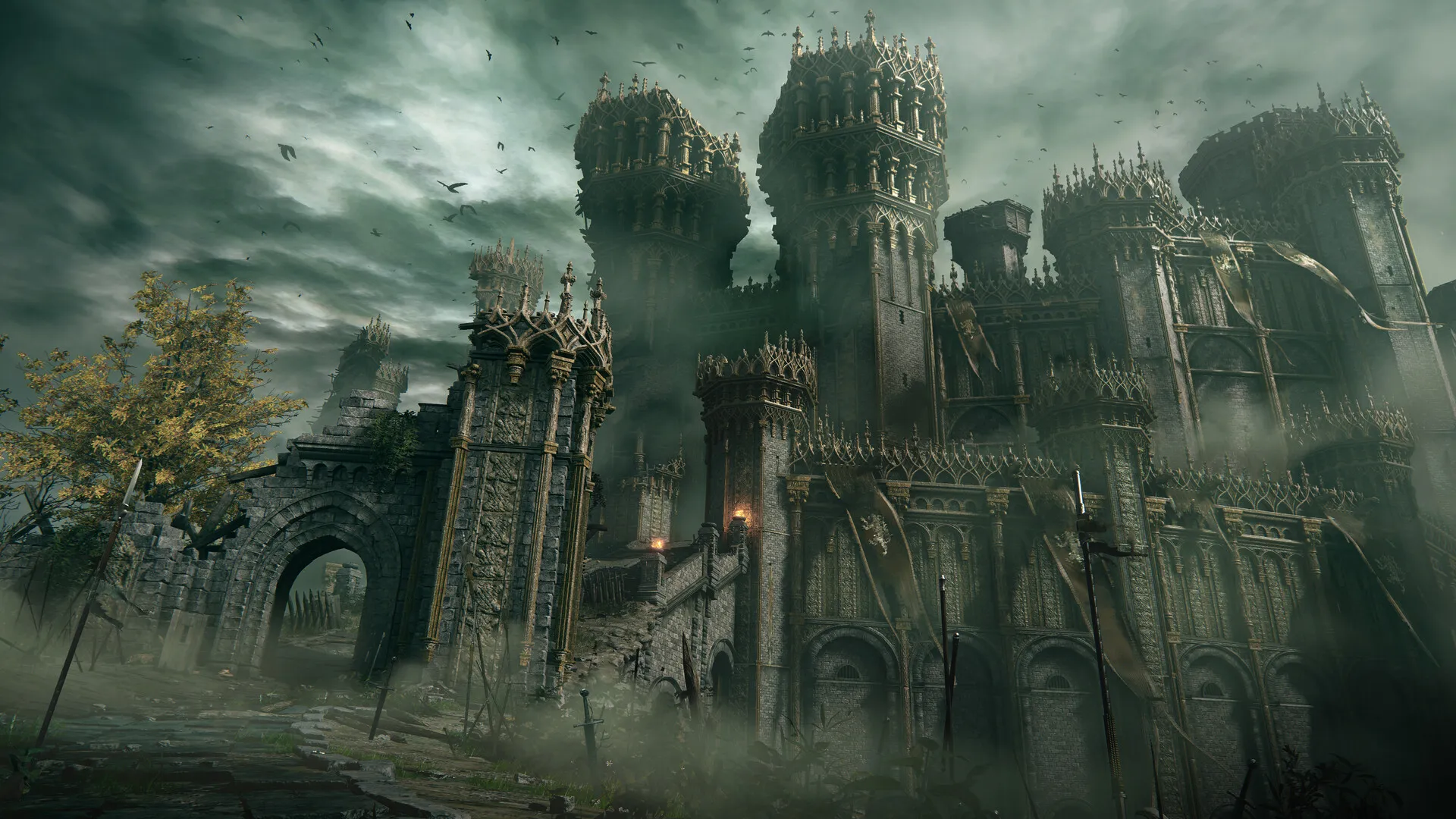
3. NPCs as Mirrors: Fragmented Characters Reflecting a Fragmented World
NPCs in Elden Ring are not companions—they are broken individuals who appear briefly, offer cryptic dialogue, and often disappear or die. Their fragmented stories mirror the fractured state of the world.
Each NPC embodies a different form of isolation. Ranni isolates herself from fate. Blaidd struggles with loyalty and identity. Millicent battles a curse that isolates her from humanity. These characters do not accompany the player; they simply cross paths, reinforcing the idea that everyone in the Lands Between walks their own lonely road.
H3: The Tragedy of Temporary Connections
NPCs rarely stay long. Their fleeting presence emphasizes the impermanence of relationships in a dying world.
4. The Open World as a Psychological Test
Elden Ring’s open world is not designed to empower the player—it is designed to test them. The vastness of the map creates a sense of freedom, but also a sense of insignificance. You are one small figure in a massive, uncaring world.
This scale amplifies the feeling of isolation. When you stand on a cliff overlooking Limgrave or Caelid, the world feels indifferent to your existence. The game does not celebrate your progress; it simply continues, vast and unchanging.
H4: Freedom Without Comfort
Unlike other open‑world games, Elden Ring does not fill its world with distractions or friendly faces. The freedom it offers is raw and intimidating.
5. Death as a Companion: How Failure Reinforces Isolation
Death is constant in Elden Ring. Every failure reminds the player that they are alone in their struggle. There is no NPC to revive you, no companion to assist you, no checkpoint that feels comforting.
This repeated cycle of death and rebirth creates a psychological loop: isolation → struggle → failure → persistence. Over time, players internalize this loop, developing resilience and determination.
The Solitude of the Checkpoint
Sites of Grace offer rest, but not companionship. They are lonely beacons in a hostile world.
6. Boss Encounters: Isolation at Its Most Intense
Boss fights in Elden Ring are the ultimate expression of isolation. When the fog gate closes, it is just you and the enemy. No distractions. No escape. No help.
These encounters are designed to be overwhelming. Bosses like Malenia, Radahn, and Morgott embody themes of tragedy, loss, and corruption. Facing them alone forces the player to confront not only their mechanical skill but also their emotional endurance.
H3: The Arena as a Psychological Space
Boss arenas are often empty, circular, and symbolic—reflecting the internal struggle of the Tarnished.
7. Summons and Spirits: The Illusion of Companionship
While Elden Ring allows players to summon spirits or other Tarnished, these companions are temporary and limited. They offer assistance, but not comfort. They do not speak, they do not share your journey, and they vanish after each battle.
This creates an interesting dynamic: the game gives you help, but never true companionship. Even multiplayer summons reinforce this idea—other players appear as phantoms, fleeting and disconnected from your world.
H4: Companionship Without Connection
Summons reduce difficulty but do not reduce loneliness. They are tools, not relationships.
8. The Narrative of the Tarnished: A Hero Defined by Solitude
The Tarnished is not a chosen hero—they are an exile, called back to a world that rejected them. Their journey is not one of destiny but of persistence. This narrative reinforces the theme of isolation: you are not saving the world; you are trying to carve out a place in it.
The Tarnished’s silence is symbolic. They do not speak because they are not meant to be a character—they are meant to be a vessel for the player’s own emotional journey.
The Burden of Being Unseen
The world rarely acknowledges your achievements. Even after defeating gods, you remain a stranger.
9. Endgame Isolation: The Final Stretch Into Emptiness
As the game progresses, the world becomes even more desolate. Leyndell burns. Farum Azula crumbles. The Erdtree rejects you. The final areas feel like the last breaths of a dying world.
This increasing emptiness amplifies the emotional weight of the journey. By the time you reach the final boss, the loneliness is overwhelming. The world has nothing left to offer except resistance.
H3: The Emotional Climax of Isolation
The final battles are not just physical challenges—they are emotional confrontations with the weight of the entire journey.
10. The Endings: Isolation as Destiny
Every ending in Elden Ring reinforces isolation. Whether you become Elden Lord, usher in the Age of Stars, or burn the world, the Tarnished stands alone. There is no celebration, no companionship, no closure.
Even Ranni’s ending—often seen as the “best”—is a lonely path into the unknown. The Tarnished becomes a consort, but not a partner. The journey ends as it began: in solitude.
H4: The Circle of Loneliness
Elden Ring begins with isolation and ends with isolation. The cycle is unbroken.
Conclusion
Elden Ring’s isolation is not a flaw—it is a deliberate design choice that shapes every aspect of the game. From the silent landscapes to the tragic NPCs, from the overwhelming bosses to the ambiguous endings, the game uses loneliness as a narrative and emotional tool. This isolation forces players to confront their own resilience, determination, and sense of purpose.
By embracing solitude, Elden Ring creates a uniquely powerful experience—one that lingers long after the final boss is defeated. The Lands Between may be empty, but the emotional journey they inspire is anything but.