




Introduction
Endless runner games have remained one of the most enduring genres in mobile gaming because they combine simple mechanics with escalating tension. Within this category, Fire Boy Run Adventure represents an interesting evolution of the runner formula by blending fast-paced movement with elemental world design. Instead of focusing solely on speed and obstacle avoidance, the game builds its identity around fire-themed environments, lava-based hazards, and dynamic platform structures that intensify the experience as players progress.
While many runner titles focus primarily on reflex gameplay similar to classics like Temple Run, Fire Boy Run Adventure integrates environmental storytelling and layered obstacle design to create a world shaped by volcanic landscapes, molten rivers, and blazing energy structures. The game’s identity revolves around the elemental nature of fire—its danger, power, and unpredictability—which becomes a central theme throughout the progression of levels and environments.

1. The Concept Behind Elemental Runner Worlds
The idea of elemental-themed runners emerged as developers searched for ways to differentiate their games from traditional city or jungle runners.
In Fire Boy Run Adventure, the concept revolves around a character capable of surviving intense heat while navigating dangerous volcanic terrain. Fire becomes not just a visual theme but the structural core of the game’s world design.
Core Design Inspirations
- Lava-filled landscapes
- Molten cave systems
- Burning crystal structures
- Fire-powered movement mechanics
These elements create a unique environment where the runner appears naturally adapted to survive conditions that would normally destroy other characters.
Thematic Consistency
The consistent use of fire imagery—from glowing platforms to erupting volcanoes—helps build a strong visual identity for the game.
2. Early Level Design and Introductory Environments
The opening stages of Fire Boy Run Adventure are designed to introduce players gradually to the elemental world.
Instead of overwhelming players with hazards immediately, the first levels focus on teaching the rhythm of movement and the visual language of danger.
Early Environmental Features
- Small lava pools
- Slow-moving flame barriers
- Wide jumping platforms
- Basic collectible paths
These features allow players to understand how fire-related hazards behave within the game’s physics.
Learning Through Movement
The early game prioritizes rhythm over speed, encouraging players to develop a sense of timing before the environment becomes more aggressive.
3. Lava Rivers and Hazard Escalation
As players advance deeper into the adventure, lava becomes the most prominent environmental obstacle.
Lava rivers divide the map into narrow safe zones, forcing players to perform rapid jumps and directional changes while maintaining speed.
Types of Lava Hazards
- Flowing molten rivers
- Rising lava platforms
- Exploding lava bubbles
- Collapsing magma bridges
Each hazard adds layers of tension while reinforcing the fiery theme.
Visual Intensity
Bright orange lava lighting contrasts with dark volcanic rock, making the danger visually unmistakable.

4. Vertical Platforming in Volcanic Caverns
Many runner games focus primarily on horizontal movement, but Fire Boy Run Adventure introduces vertical complexity through cavern environments.
These areas include rising platforms, descending tunnels, and layered jumping paths.
Vertical Gameplay Elements
- Lava geyser lifts
- Falling rock platforms
- Vertical flame traps
- Multi-level pathways
These additions expand the gameplay space and prevent the experience from becoming repetitive.
Environmental Depth
The cavern settings make players feel as if they are traveling deeper into a massive volcanic system.
5. Fire Energy Orbs and Progression Systems
Collectible items are an essential part of runner games. In Fire Boy Run Adventure, fire energy orbs serve as both currency and progression markers.
These glowing items float above platforms and often appear in risky positions.
Orb Placement Strategies
- Suspended above lava pits
- Hidden within flame tunnels
- Clustered near difficult jumps
- Aligned along speed ramps
This placement encourages players to take calculated risks.
Visual Reward Feedback
When collected, energy orbs release bursts of fiery particles, reinforcing the elemental theme.
6. Dynamic Obstacles and Environmental Traps
To maintain excitement, the game gradually introduces moving hazards and unpredictable traps.
These elements transform the environment from static scenery into an active threat.
Dynamic Trap Examples
- Rotating flame wheels
- Collapsing magma platforms
- Erupting volcanic vents
- Swinging fire chains
These hazards require quick reflexes and constant attention.
Increasing Reaction Speed
As players progress, the timing windows between traps become smaller, forcing faster decisions.
7. The Role of Speed Boost Zones
Speed boost zones represent moments of sudden acceleration within the game.
These glowing pathways launch the character forward at high speed, creating dramatic bursts of motion.
Boost Zone Characteristics
- Fiery acceleration trails
- Flame-powered launch ramps
- Rapid obstacle sequences
- High-risk collectible paths
These segments create some of the most thrilling moments in the adventure.
Controlled Chaos
Boost zones combine speed with dense obstacle placement, creating intense gameplay bursts.

8. Environmental Storytelling Through Volcanic Landscapes
Although the game contains minimal narrative text, the environments themselves suggest a larger story.
Players move through abandoned temples, ancient lava chambers, and glowing energy structures that hint at a forgotten civilization powered by fire.
Environmental Clues
- Ruined volcanic temples
- Fire crystal generators
- Lava-powered bridges
- Ancient flame statues
These details add depth to the world without interrupting gameplay.
A Journey Through Fire
The environments evolve gradually, giving the sense that players are exploring deeper and more dangerous regions of the volcanic world.
9. Late-Game Intensity and Extreme Obstacles
The later stages of Fire Boy Run Adventure dramatically increase the challenge.
Lava flows become wider, platforms become smaller, and obstacle combinations become more complex.
Advanced Hazard Combinations
- Flame wheels combined with collapsing floors
- Lava waves intersecting jump paths
- Multi-directional trap patterns
- High-speed vertical platform chains
These combinations demand both skill and concentration.
Maintaining Fair Challenge
Despite the difficulty increase, the game maintains clear visual cues so players can react quickly.
10. The Enduring Appeal of Elemental Runner Games
Elemental runner games remain popular because they combine recognizable mechanics with visually striking worlds.
In Fire Boy Run Adventure, fire serves as both an aesthetic and mechanical theme, influencing every aspect of gameplay.
Reasons for Long-Term Appeal
- Fast and accessible gameplay
- Visually dramatic environments
- Continuous difficulty progression
- Satisfying collectible systems
These elements allow the game to remain engaging even after long play sessions.
The Power of Simple Mechanics
The core idea—run, jump, survive—remains simple, but environmental creativity keeps the experience fresh.
Conclusion
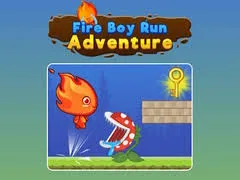
Fire Boy Run Adventure demonstrates how a familiar runner formula can evolve through strong thematic design. By building the entire game world around fire, lava, and volcanic landscapes, the developers created an environment that feels dynamic, dangerous, and visually striking. The progression from simple lava pools to complex volcanic caverns and high-speed obstacle sequences ensures that the gameplay continuously evolves as players advance. Collectible fire energy, environmental storytelling, and increasingly intense hazards combine to transform a straightforward runner into a vivid elemental journey. Ultimately, the game proves that even within a simple genre, creative world-building and escalating environmental design can produce a compelling and memorable experience.